


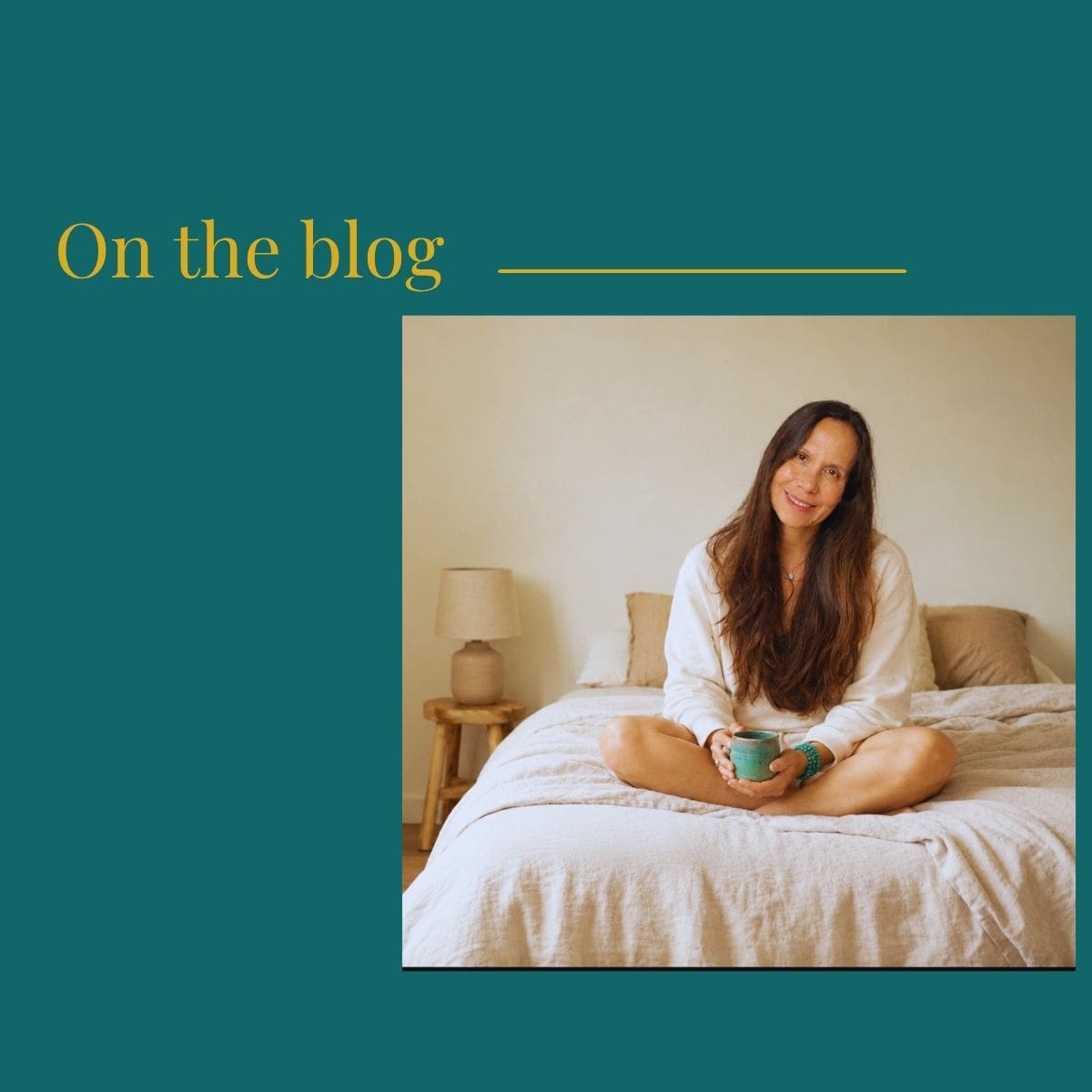
By Lisa M Kerr, Sacred Rest
It’s 3am. Your eyes open. No alarm, no noise, nothing wrong, just that familiar, wide-awake feeling.
Then the list starts. The email you forgot to send. The appointment you need to book. The thing someone said three days ago. Your body is lying still, but your mind is already halfway through tomorrow.
If you’re a midlife woman who keeps waking up at 3am and can’t switch off, you’re far from alone, and midlife sleep doesn’t have to be a nightly battle.
I know, because that was me.
And it’s why I created the 7-Day 3AM Club to help you find your way back to rest, and we start live on Sunday, November 8.
The night I stopped fighting it
For a long time, I treated my 3am wake-ups like an enemy. I’d lie there doing the maths. If I fall asleep right now, I’ll still get four hours. I tried harder. I tossed, I turned, I checked the clock (never do this), and I got more frustrated with every minute.
Trying harder never worked. It only made my body more alert.
What finally shifted things was a practice called 61 points deep relaxation. You lie down, and a gentle voice guides your attention through 61 points of the body, one at a time, while your breath stays easy. There’s nothing to get right and nothing to think about except the next point.
It comes from the same family as yoga nidra, the classic practice of deep rest, where you stay softly alert as you move into a deep state of consciousness. Yoga nidra is a beautiful practice in its own right. The way I use 61 points is simpler and sleepier: it’s deep relaxation, meant to help the body let go so sleep can follow.
I learned it from my teacher, Rod Stryker, and I started by using the version he gave us. At 3am, I’d play it, or I’d simply remember his words and follow them in my head. They gave me somewhere to put my attention that wasn’t the to-do list.
Over time, something lovely happened. I stopped needing his words and started guiding myself. I found my own pace, my own phrases, the ones that actually landed in my body at that hour of the night. The 3am wake-up stopped feeling like a problem and started feeling like a pause I could use.
Now I want to do the same for you.
So what is rest, anyhow?
Here’s the question I keep coming back to, and I think it’s the heart of it for so many of us.
What actually is rest?
It isn’t just sleep. Many of us sleep (or try to) and still wake up depleted.
It isn’t scrolling, either. Scrolling gives your thumbs something to do while your mind keeps working.
And it isn’t sitting on the sofa while your head runs the household.
For me, rest is the experience of being allowed to stop: body supported, mind soft, nothing to fix or achieve for a few minutes. Not earned. Not postponed until everything is done. Just permitted.
Which, if you’re a midlife woman, might feel almost impossible.
Why letting go feels so hard right now
Midlife asks a lot of us. Many of us are holding careers, families, aging parents, relationships and our own changing bodies, all at once. Hormonal shifts can also play a part in how we sleep, which is one reason it’s worth talking to your doctor if your sleep is persistently disrupted.
But there’s something else underneath, and it’s rarely talked about.
Most of us have spent decades being the one who holds it all together. Our nervous systems have been on duty for a very long time. So when we finally lie down, stopping can feel strange. Unsafe, even. Selfish. Lazy. Like if we let go, something will fall.
That isn’t a flaw. It’s a body that learned to stay alert because staying alert was needed.
The good news? What was learned can be gently unlearned. Not through force, but through small, repeated experiences of safe stopping.
Better nights start in the morning
Here’s something I wish I’d understood sooner: a good night’s sleep doesn’t begin at bedtime. It begins when you wake up, and it’s shaped by small things all through the day.
Stepping outside into natural light soon after waking, even for a few minutes, can help your body clock know when the day has started. A little movement, like a walk or a gentle stretch, can help your body feel ready for rest later. Even how you eat through the day can play a part (we won’t be digging into nutrition in the 3AM Club, but it’s part of the bigger picture).
None of this is a big overhaul. Each one is a small signal to your body that day and night have different jobs, so that when you finally lie down, rest already has a little help.
The Sacred Pause
That’s what I mean by a Sacred Pause: a small, intentional stop. Not a retreat in the mountains. Not a complete life overhaul. Just a few minutes where you give yourself permission to put everything down.
61 points deep relaxation is one of the ways I do that. At 3am, it turns the hour I used to dread into a place of quiet. Many women find that simply having something gentle to do with that wide-awake moment changes how it feels.
It may not make the wake-up disappear. But it can change your relationship to it, and that changes a lot.
Come and try it with me
I created the 7-Day 3AM Club because I didn’t want you to have to figure this out alone at 3am, the way I did.
It’s not seven days of yoga nidra. It’s seven simple ways to support better-quality sleep, from how you start your morning to how you wind down at night, with the 61 points deep relaxation as a gentle tool for those 3am moments.
We start live on Sunday, November 8, inside Sacred Rest, our community on Skool (the same warm space you may know as Midlife Sacred Pause).
Join me each evening at 7pm ET, for a gentle 20 to 30 minute session, with the replay waiting if you can’t make it. You’ll have a gentle voice to lean on until you find your own, and other women who understand exactly what you’re going through.
No perfection required. No “doing it right.” Just seven days of practicing the art of stopping.
Join the Free 7-Day 3AM Club: live on Skool, starting Nov 8 at 7pm EST → https://www.skool.com/midlife-sacred-pause-9272/about
If you’re experiencing ongoing or severe sleep problems, please speak with your healthcare provider. The practices shared here are for rest and relaxation and aren’t a substitute for medical care.


